
9 walking spots tagged “Gallery”. Near 東京駅 and 7 other areas.
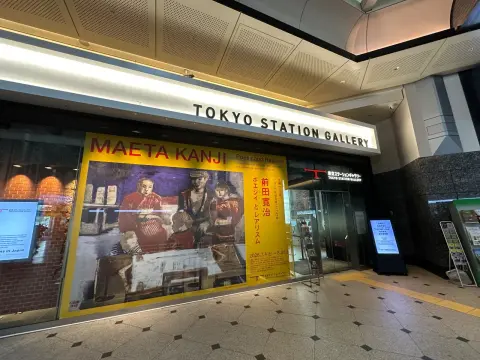
An art center with an attached cafe, directly connected to the Yaesu South Exit of Tokyo Station and free to enjoy. It holds around eight exhibitions a year, along with workshops and other events where you can meet the artists on site. BUG Cafe opens from 8:00 on weekdays, serving a kuro-shichimi (black seven-spice) keema curry lunch set for ¥1,150 (weekdays only).
A Kyobashi landmark where the head office of Toda Corporation was reborn in autumn 2024 as a building overflowing with art. It houses APK PUBLIC, which presents works in shared spaces such as Atsuko Mochida's 〈Steps〉 in the atrium; a gallery complex on the 3rd floor; CREATIVE MUSEUM TOKYO on the 6th floor; and a gallery and bakery café on the 1st floor. Together with the neighboring Artizon Museum, it forms the "Kyobashi Saiku" area. Opening hours and closing days vary by facility and shop.
An exhibition space on the 3rd floor of the POLA Ginza Building in Ginza. It holds special exhibitions centered on contemporary art. Admission is free.
Opened in 1919, it is said to be the oldest surviving art gallery in Japan. Located in the basement of the Tokyo Ginza Shiseido Building, it holds special exhibitions of contemporary art. Admission is free.
An exhibition space housed in a building that was once an okiya (a geisha house). Gallery hours vary by exhibition.
A gallery that grew out of an art project under the elevated railway tracks. It exhibits and sells works by its artists in residence.
A gallery in a white space with high ceilings and natural light from a skylight. Yuko Kuroda, who used to run a gallery in Ginza, relocated here in 2009, and the space mainly exhibits installations and sculpture. Closed in January, February and August.
A gallery and bookstore in the same building as "Umi to Hon" (海と本). Carries art books.
An art museum inside the Marunouchi station building of Tokyo Station. It opened in 1988 and was renovated to coincide with the restoration of the station building in 2012. The brick walls from the time of construction remain as the walls of the exhibition rooms, so the building itself is a highlight alongside the works on display. It is right outside the ticket gates, so you can stop by at the beginning or the end of a walk.