
12 walking spots tagged “Viewpoint”. Near 池尻大橋駅 and 9 other areas.
An open-air terrace on the 7th floor of the Shin-Marunouchi Building. Enjoy views of Tokyo Station's Marunouchi station building with food and drinks bought at the restaurants and bars of Marunouchi House in hand. May be closed depending on the weather.
A rooftop garden on the 6th floor of JP Tower / KITTE. From the freely accessible wooden deck you can look down on Tokyo Station's Marunouchi station building and the trains coming and going, and it is also known as a night-view spot. It may be closed in bad weather.
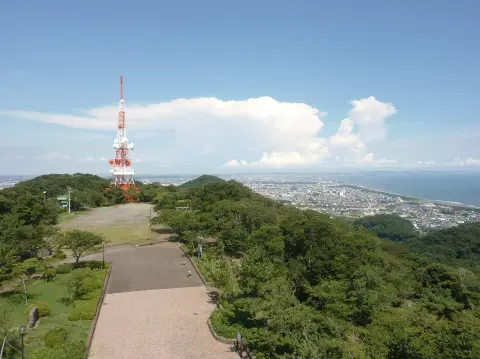
A hill about 180 m high straddling Hiratsuka City and Oiso Town. A viewpoint where you can enjoy 360-degree panoramas of Mt. Fuji, Sagami Bay and other spectacular scenery. After sunset, the night view is beautiful too.
A scenic spot spreading across the boundary between Hayama and Yokosuka. It commands sweeping views of Enoshima and Mt. Fuji, and is known for the scenery around sunset. The surrounding area is an eelgrass bed, home to abundant marine life.
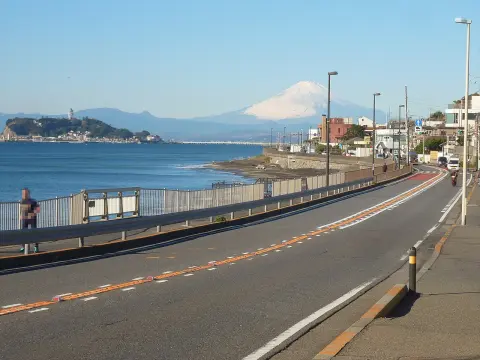
A cape jutting out at the boundary between Shichirigahama and Yuigahama, known locally as "Inamura." When conditions such as a low-pressure system come together, big waves roll in, making it a surf spot known for advanced surfers. Legend holds that during the 1333 assault on Kamakura, Nitta Yoshisada opened a path through the great waves here. It has also been the setting for Keisuke Kuwata's film "Inamura Jane" and Akimi Yoshida's manga "Umimachi Diary."
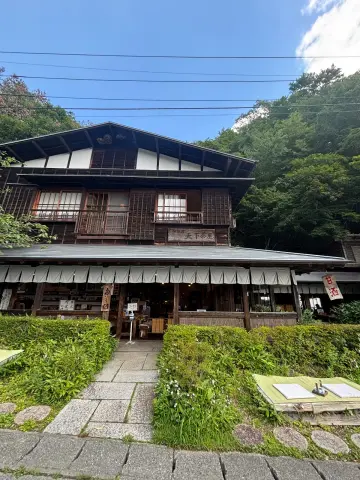
河口湖を見下ろす御坂峠にたたずむ茶屋です。眼下に湖が広がり、その先には富士山を望みます。作家の太宰治がここに滞在し、随筆『富嶽百景』を書いた場所でもあります。峠道を歩いてきた人が、雄大な景色とともにひと息つける一軒です。
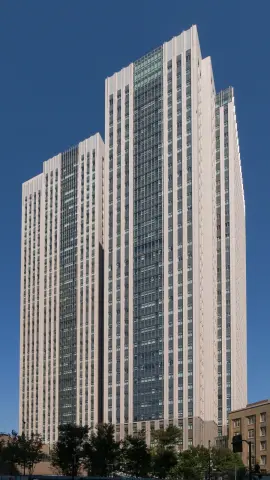
A high-rise mixed-use complex in Kasumigaseki, Tokyo's government office district. It was redeveloped while preserving the former Ministry of Education building constructed in the 1930s, so the old stone facade and the tall towers stand side by side. It is right by Toranomon Station, and there are spots on the upper floors with views over the Kasumigaseki government district and the cityscape toward Hibiya.
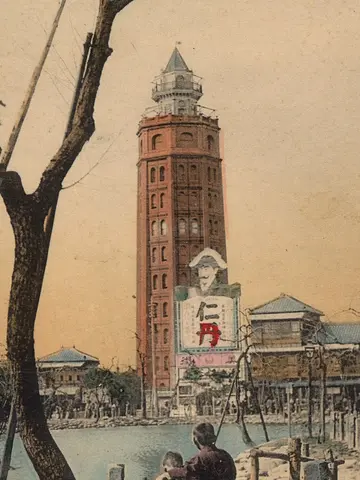
A twelve-story tower built in Asakusa in 1890 (Meiji 23), known as the "Asakusa Twelve Stories." It was the first building in Japan to be fitted with an electric elevator. Damaged in the Great Kanto Earthquake of 1923 (Taisho 12), it was subsequently demolished. Nothing of the building remains today; a monument stands on the site, a spot to imagine its former height as you walk the streets of Asakusa.
A nature spot with a stream and wetland near Meguro Station. With waterside scenery to enjoy right in the city, it is easy to work into a walking route.
A garden created on the rooftop of the Ohashi Junction of the Metropolitan Expressway, opened in 2013. The path loops along the spiral shape of the junction, and the view opens up as you climb. Flowers and trees are planted on the slopes, letting you walk through greenery that hardly feels like it sits above a highway. It is just steps from Ikejiri-Ohashi Station.
A Meguro City garden spread across the rooftop of the Ohashi Junction. A spiral path loops around the grounds, raised high above street level, letting you look out over the surrounding cityscape as you walk. Seasonal flowers and plants are planted here, so the same path shows a different face with each visit. It is reachable on foot from Ikejiri-Ohashi Station.
A landmark of Sangenjaya. The 26th-floor observation lobby offers free admission with panoramic views of Mt. Fuji and the Shinjuku subcenter. Open 9:30–23:00 (closed 2nd Wednesdays and year-end/New Year holidays).